In this guide
Whether you live in a bungalow in Thane or manage a society in Navi Mumbai, choosing between a sliding gate and a swing gate is one of the first decisions when automating an entrance. This guide compares them so you can decide with confidence.
How each type works
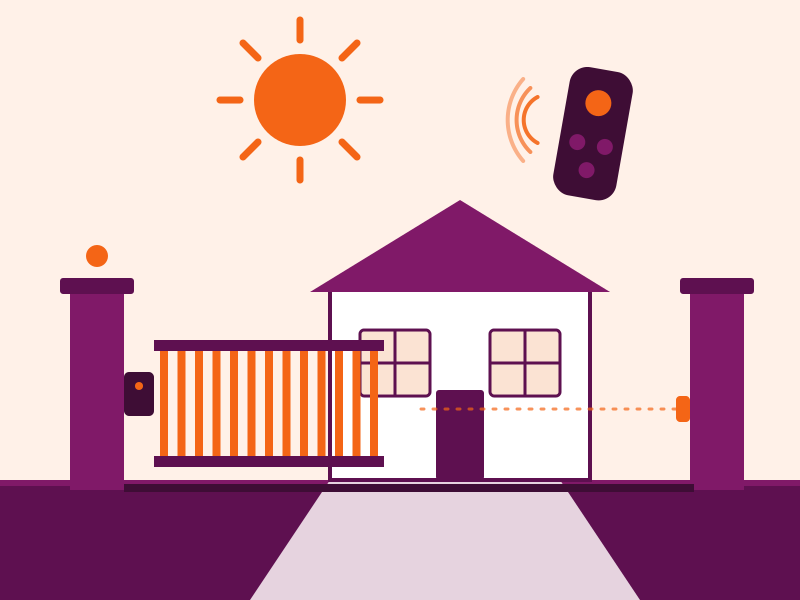
- Sliding gates move sideways along a track, running along your compound wall or fence.
- Swing gates open on hinges, like a door, either inward or outward. Motors are fitted at the hinges or on the gate.
Space: the deciding factor
A sliding gate needs a clear run to the side of the opening, roughly equal to the width of the gate. A swing gate needs a clear arc where the leaves can open. In crowded parts of Mumbai and Thane, one or the other is often impossible. Measure before you decide:
- How wide is the opening?
- Is there a clear, straight wall or fence beside the gate for a sliding gate?
- Is there room inside for a swing gate to open without hitting vehicles, steps or plants?
- Does the ground slope? Slopes affect both types.
Check also that a swing gate does not open onto a public road or footpath. That can cause problems for traffic and safety.
Comparing the two
Sliding gates
- Good where space in front of the gate is limited.
- Suit wide openings and heavier gates.
- Need a track that must be kept clean, especially in the monsoon.
Swing gates
- Good where there is a clear arc and no side space.
- Often simpler for narrower openings.
- Wind can push on large solid gates, so the design matters.
For societies: think about traffic
A society gate sees vehicles all day. Look at how fast the gate opens, how it handles repeated use and how it works with the security cabin. Many societies link the gate to a remote, an RFID card or an intercom, and combine it with access control and CCTV.
Safety features to ask about
- Safety sensors that stop the gate if something is in the way.
- A manual release for power cuts.
- Warning light or buzzer when the gate moves.
- Limit settings so the gate stops cleanly at each end.
Maintenance in Mumbai’s climate
Humidity and salt air can cause rust, especially on tracks and hinges. Keep moving parts lubricated, repaint chipped areas, clean the track and test the safety sensors regularly. Our monsoon checklist has a short gate section you can follow.
Materials and finish
Gates are usually made of mild steel, aluminium or stainless steel. Mild steel is strong and affordable but needs good paint or galvanising to resist rust in humid and coastal air. Aluminium is lighter and resists rust but may suit lighter duty. Stainless steel resists rust well but costs more. The choice should match the weight limits of the motor.
Choosing the motor
A motor must suit the weight and size of the gate and how often it is used. A society gate that opens hundreds of times a day needs a heavier-duty motor than a bungalow gate used a few times daily. Ask the installer to explain the weight rating and the duty cycle.
How installation works
- Site visit. The installer measures the opening and checks the ground, the posts and the power supply.
- Foundation and track or hinges. A proper base and track are essential for smooth, quiet running.
- Motor and control box. The motor, control board and sensors are fitted.
- Safety and testing. Limits, sensors and the manual release are set and tested.
- Handover. You get the remotes, learn how to use the manual release and know whom to call.
Entrance design for societies
Consider a separate pedestrian gate so people do not walk through the vehicle path, and plan where vehicles will wait. You can link the gate with access control and an intercom if you want residents’ vehicles and visitors handled differently.
Automating your existing gate
If your current gate is straight, sturdy and moves freely, it can often be automated. If it is bent, rusted or very heavy, you may need repairs first, or a new gate.
Next step
The best choice depends on your space and traffic. Book a site visit and we will measure your opening and recommend a gate, or read about our automatic gates and doors.
Frequently asked questions
Can I automate a gate I already have?
In many cases, yes. The gate needs to be straight, sturdy and move freely. Your installer will check the gate, the posts and the ground before recommending a motor.
What happens to an automatic gate in a power cut?
Most gate motors have a manual release so the gate can be opened by hand. Ask your installer to show you how it works at handover. Some systems also add battery backup.
Are automatic gates safe for children and vehicles?
Good systems include safety sensors that stop the gate if something is in its way. Ask what safety features are fitted and have them tested at handover.
Which is cheaper, a sliding gate or a swing gate?
It depends on the size, materials and site. A swing gate can be simpler for narrow openings, while a sliding gate needs a track and side space. If space allows, get a quote for both.