In this guide
- First, walk the property and list every point
- The priority points
- Plan the system, not just the cameras
- Privacy and good practice
- Common mistakes
- Number plate cameras: get the basics right
- Visitors and staff
- Plan in phases
- A simple way to count cameras
- Consider your entrance as a whole
- Get a camera plan for your society
Housing societies in Thane, Navi Mumbai and Mumbai often ask us, “How many cameras do we need?” The honest answer is that it depends on your layout. This checklist helps your committee work out the number, and the right positions, step by step.
First, walk the property and list every point
Take the committee on a walk through the society with a notebook. Mark each place where people or vehicles enter, gather or pass. The number of cameras comes from this list, not from a rule of thumb.
The priority points
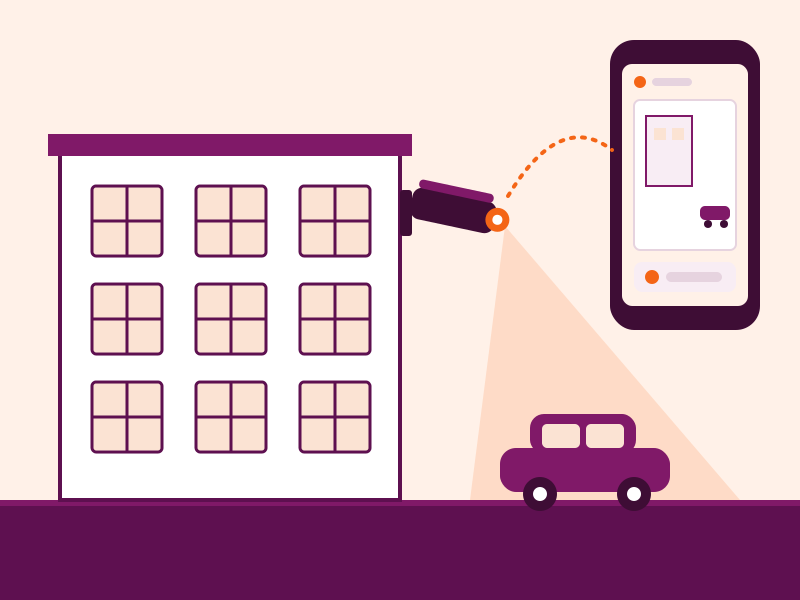
- Main gate, entry and exit. Plan separate views for people and for vehicle number plates. A camera that sees faces well may not read plates, especially at night.
- Security cabin and visitor register area.
- Building lobbies and lift lobbies in every wing.
- Staircases and terrace doors, which are often unsupervised.
- Parking entry and exit, including basement and stilt levels.
- Meter rooms, pump rooms and garbage areas.
- Clubhouse, gym, garden and play areas.
- Boundary walls and secondary gates.
Plan the system, not just the cameras
- Recording and storage. Decide how many days of footage to keep, so that storage can be sized correctly.
- Night performance. Check lighting at gates and parking, and choose cameras with good night vision where needed.
- Control room. Keep the recorder and monitor in a secure, ventilated, lockable space.
- Power backup. Use a UPS or backup supply so that cameras and the recorder keep working during cuts.
- Network and cabling. Plan cable routes in advance, especially across several buildings.
- Access to footage. Give individual logins to a small number of authorised people.
Privacy and good practice
Cameras should watch common areas, not the inside of anyone’s home. Put up clear notices that CCTV is in use, and write a short policy covering who can view footage and when it may be shared. Your committee may want legal advice on this.
Common mistakes
- Choosing by camera count alone, instead of by coverage.
- No plan for number plates at the gate.
- Too little storage, so footage is overwritten within a day or two.
- Poor lighting, so night footage is unusable.
- No maintenance plan. Cameras need cleaning and regular checks.
Number plate cameras: get the basics right
Reading number plates is harder than recognising faces. A few points help:
- Place the camera so it looks at vehicles head-on or at a shallow angle, not from far above.
- Make sure the spot is well lit at night, and avoid headlight glare.
- Keep vehicle speed low at that point, for example with a speed breaker.
- Test the footage at night before the installation is signed off.
Visitors and staff
CCTV shows what happened, but it does not stop the wrong person from walking in. Many societies pair cameras with a visitor register, a video door phone or intercom link to flats, and clear rules for domestic help and deliveries.
Plan in phases
If the budget is limited, plan the whole system on paper first and install it in phases. Start with the main gate, lobbies and parking, then add other areas. A good installer designs the recorder, cabling and storage so that cameras can be added later without redoing the work.
A simple way to count cameras
- List all entry and exit points, including pedestrian gates.
- List every lobby, staircase and lift area, wing by wing.
- List parking levels and their entries and exits.
- List common facilities such as the clubhouse, garden and pump rooms.
- Add boundary stretches that cannot be seen from the points above.
Count the cameras needed for each item. The total is a better starting point than a number copied from another society.
Consider your entrance as a whole
CCTV works best alongside good entry control. See how access control and video door phones and automatic gates can be planned together. If the society is also thinking about saving on common-area electricity, read our guide to solar for housing societies.
Get a camera plan for your society
We visit societies across Thane, Navi Mumbai and Mumbai and prepare a position plan with a clear quote. Book a site visit or read about our CCTV installation service.
Frequently asked questions
Is there a fixed number of cameras a society must have?
There is no single number that suits every society. The right number depends on the layout: entrances, wings, lobbies, parking levels and boundary. Make a list of all the points to cover and ask your installer for a camera position plan.
Who should be able to view the CCTV footage in a society?
Keep access limited to authorised people, such as the secretary, the chairperson and the security head, with individual logins where possible. Decide a policy for when footage can be shared.
How long should a society keep recordings?
That is for the committee to decide, based on needs and storage. Longer retention needs more hard-disk capacity, so settle the number of days before the system is designed.
Should a society record all the time?
Most societies record continuously at gates and parking so incidents are captured. Motion-based recording can save storage in quieter areas. Decide with your installer.